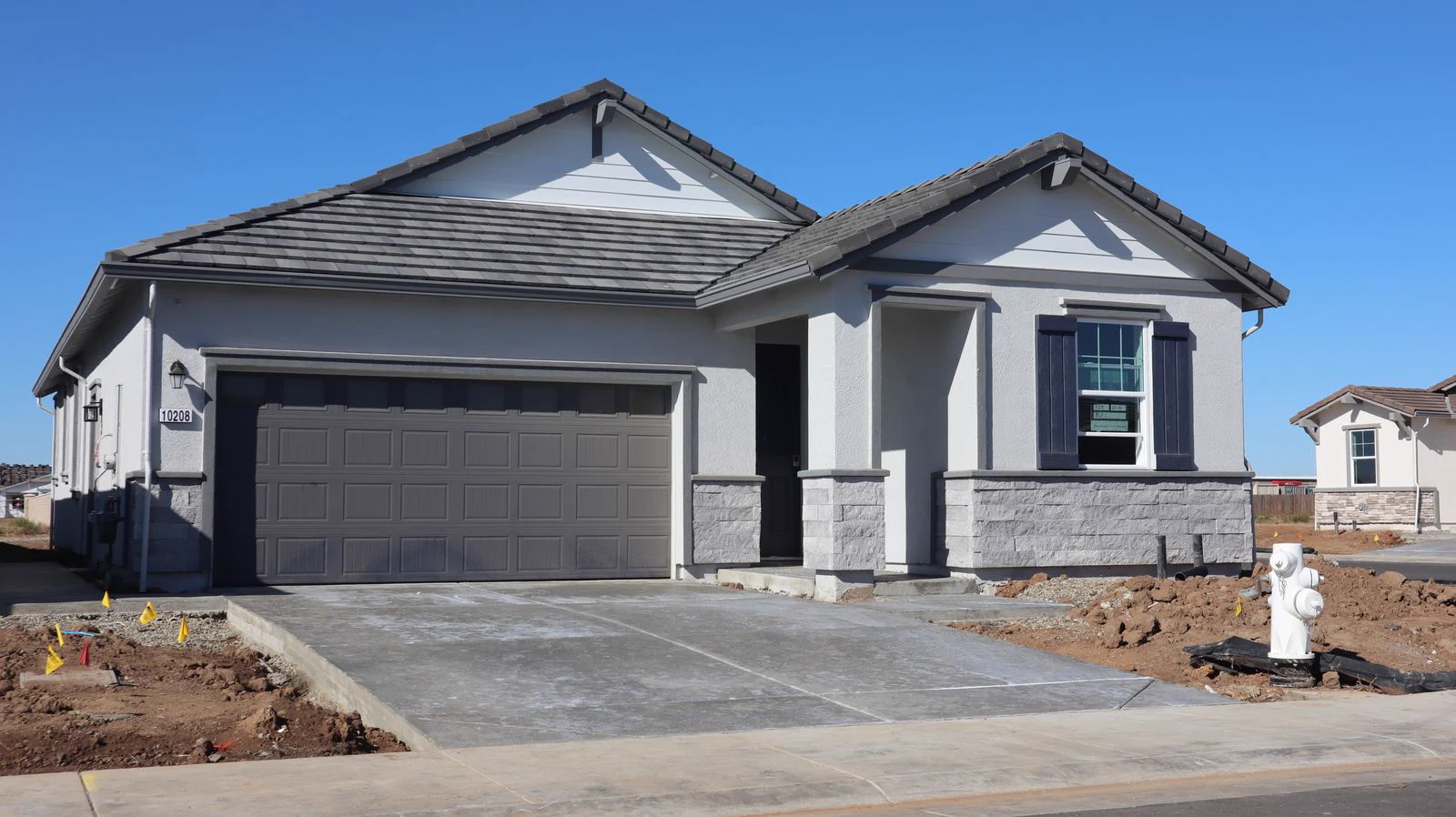
There is a particular kind of home that appeals to people at opposite ends of their homebuying lives. A young couple might want three bedrooms, enough room for a child or a home office, and a yard that doesn’t consume every weekend. A longtime homeowner might want nearly the same thing: a comfortable place on one level, with room for visitors and less space to maintain.
They have different reasons for wanting it. Their shopping lists can look remarkably similar.
Three homes and three asking prices
The largest home in this comparison was also the most expensive, at $719,000 plus solar. It had the lowest asking price per square foot, about $286 before adding solar. At the smaller Placer One home, the figure was about $420. Its asking price was $194,010 lower before accounting for solar at the larger home.
| Property | Floor area | Asking price | Asking price per square foot |
|---|---|---|---|
| 2607 Contour Way, Placer One | 1,251 sq. ft. | $524,990 | $420 |
| 2394 Buntline Way, Placer One | 2,515 sq. ft. | $719,000 plus solar | $286 before solar |
| 3208 Ardley Drive, Westpark | 1,453 sq. ft. | $533,000 | $367 |
The figures are rounded from builder and MLS listings checked November 18. They describe asking prices and listed floor area. The properties differ in location, lot, finishes and what the price includes.
JMC Homes listed 2607 Contour Way, lot 145 in Glenfield at Placer One, at $524,990 and described it as move-in ready. The home has three bedrooms, two baths and 1,251 square feet. The listing identifies owned solar among its features.
KB Home listed 2394 Buntline Way, homesite 026 in Bristol at Placer One, at $719,000 plus solar and marked it available. The single-story home has four bedrooms, two baths and 2,515 square feet. The builder identifies it as Plan 2515.
MetroList showed 3208 Ardley Drive in Roseville’s Westpark at $533,000. The single-story home has three bedrooms, two baths and 1,453 square feet, with a rear-entry two-car garage and listed association dues of $91 a month. The resale provides a shopping comparison with the compact new build. It sits in a different neighborhood and would need its own inspection and cost estimate.
Why a smaller house can cost more per square foot
A homebuilder begins with land. Roads, utilities, drainage, permits and development requirements all cost money. Some of those costs barely change when the house gets smaller. On an expensive lot, a larger home can sometimes support a higher selling price and make the project work.
In a HousingWire interview, homebuilding consultant Scott Cox raised the possibility that a weaker market for residential land could change that calculation. If builders gain leverage with land sellers, smaller homes might become easier to build profitably. That could give first-time buyers and older owners more choices. The listings show that some smaller homes already exist at Placer One. A broader shift would take evidence from land sales, plans and new construction over time.
Harvard’s Joint Center for Housing Studies projects that the U.S. will add 8.6 million households from 2025 to 2035 and 5.1 million over the following decade in its main scenario. Its 2026 housing report also projects that households headed by someone 80 or older will roughly double from 2025 to 2045. A region’s total housing need tells us only part of what its residents will need from the homes being built.
What a discount changes
On November 17, the National Association of Home Builders reported that confidence among single-family builders fell four points to 25, a 14-year low. In the national survey, 46% of builders reported cutting prices, with an average reduction of 6%, and 68% reported offering sales incentives. Builders could report both. For someone shopping in Placer County, the opportunity depends on which homes are available, what they cost and whether the space fits.
A price reduction lowers what the buyer pays for the property. A closing-cost credit can reduce cash due at closing, subject to loan rules. A temporary buydown subsidizes part of the payment for a set period. When it ends, the borrower makes the full scheduled payment. A lower contractual rate on a fixed-rate loan changes the ongoing principal and interest payment. The cost of securing that rate and any conditions attached to it belong in the comparison.
Use the same down-payment percentage, loan term and rate assumptions to compare the properties first. Then compare any builder financing with an independent Loan Estimate on comparable terms. Look at points, lender fees, total monthly payment and cash to close. Ask for the parcel-specific tax estimate and any special charges such as Mello-Roos, along with insurance and association dues. At the Bristol home, price out solar separately. At the resale, budget for any near-term work an inspection identifies.
Placer County is still planning for growth
Placer County’s long-range market analysis estimates that demand could support roughly 41,600 to 58,000 additional housing units countywide by 2050 under its growth and declining-vacancy assumptions. That estimate speaks to potential demand across the county. It leaves open how many homes will have three bedrooms, be on one level or fit the budgets of the households looking for them.
The larger home offers more space for each dollar of its asking price. The smaller home asks for fewer dollars overall. Neither number tells a buyer which place will feel right five years from now.
That answer depends on what they need from the house and what they want to be able to afford outside it.
Sources
- JMC Glenfield inventory (new tab)
- KB Home homesite 026 (new tab)
- MetroList resale listing (new tab)
- NAHB November survey (new tab)
- HousingWire interview with Scott Cox (new tab)
- Harvard household projections (new tab)
- Harvard 2026 housing report (new tab)
- Placer County market analysis (new tab)
- CFPB Loan Estimate guide (new tab)
- Placer County property tax overview (new tab)