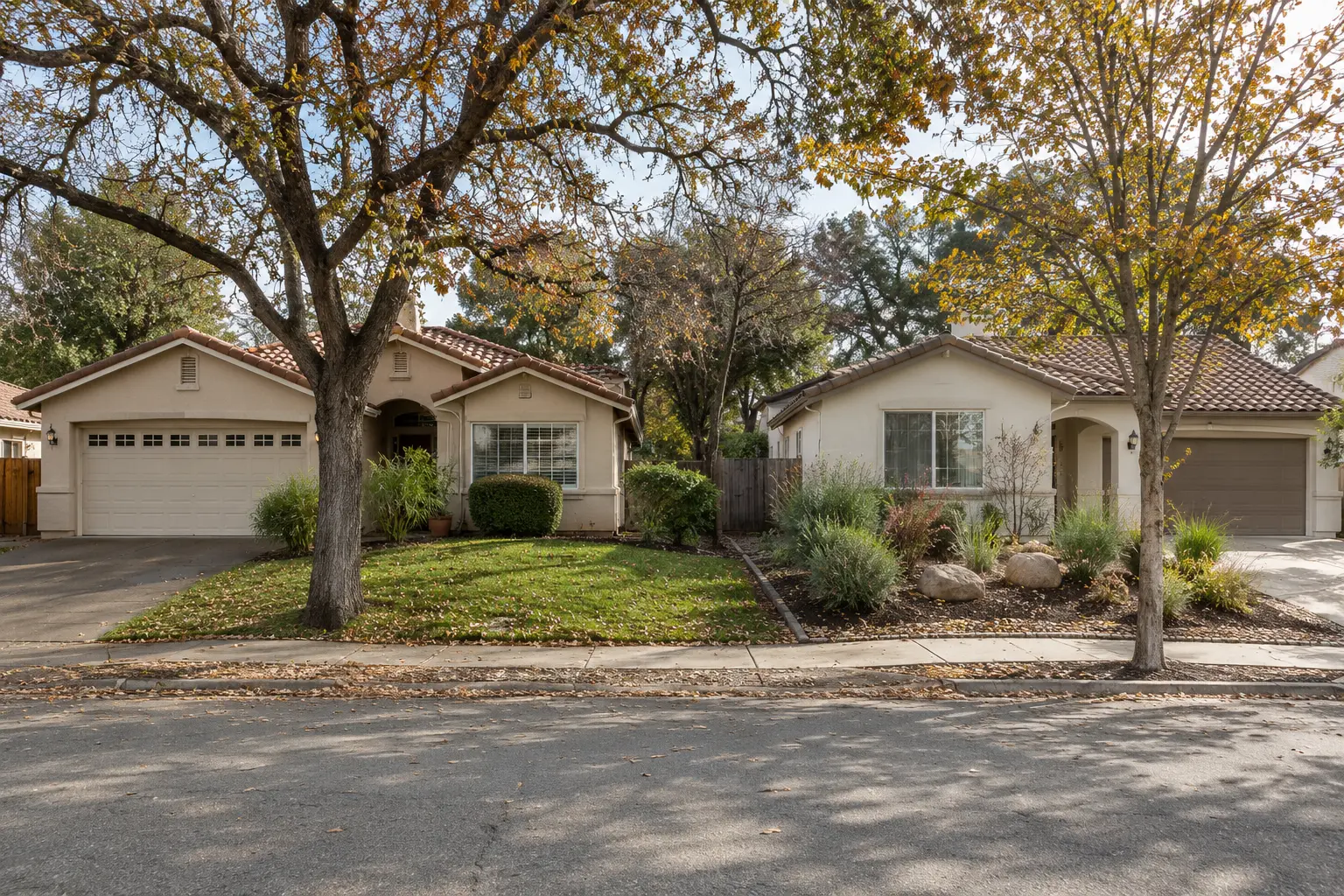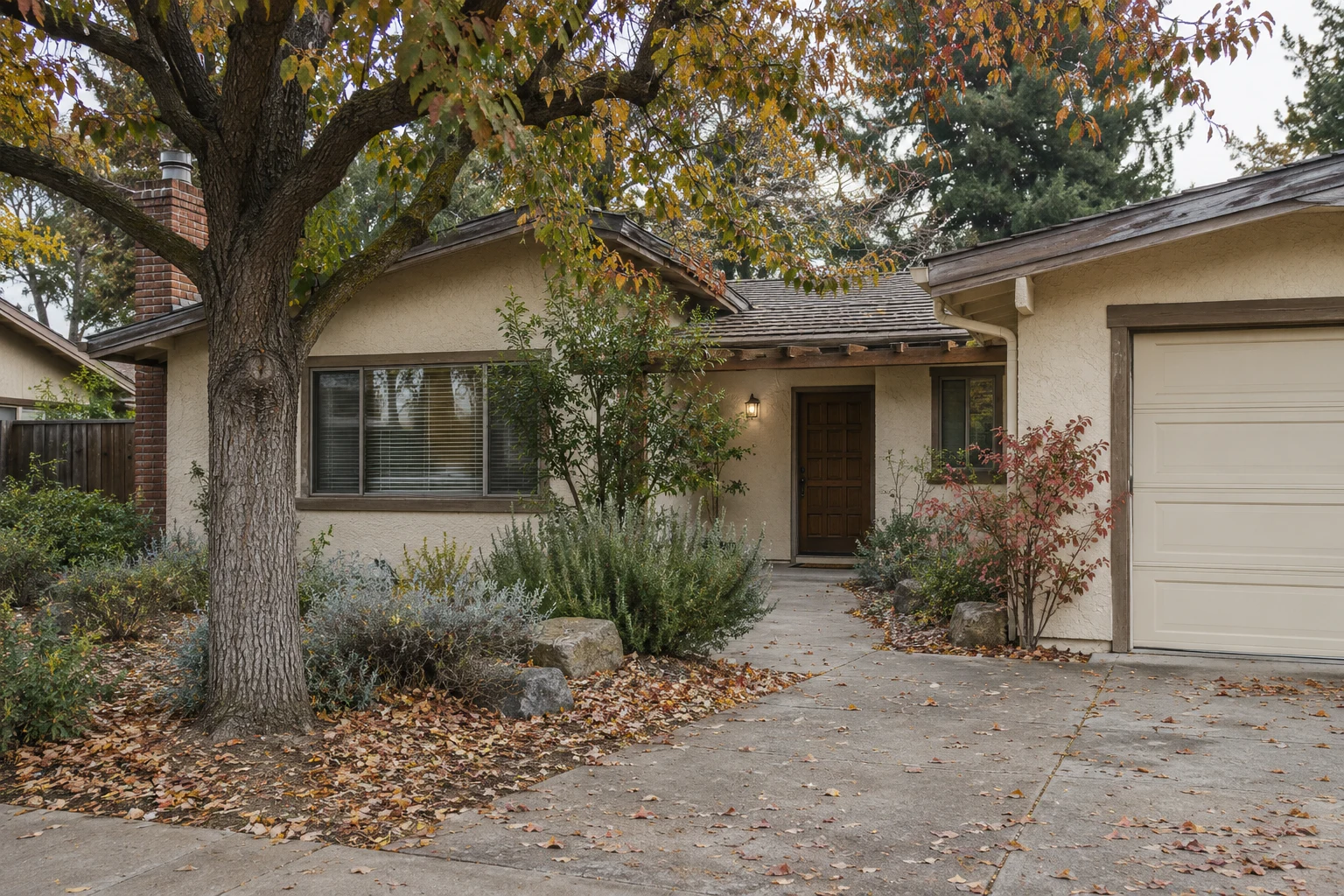
The seller is willing to give up $15,000. Before you ask to take it off the price, there is another question worth asking: What could that money do to the mortgage payment?
In the Roseville purchase example below, a price reduction saves about $102 a month in principal and interest. Using the same $15,000 to buy a permanently lower interest rate saves about $201. Keeping the higher rate and using a credit for closing expenses does something else: it leaves more of the buyer's savings in the bank.
Those are three different improvements to a household's finances. The right one depends on what is making the purchase difficult.
A price cut is an opening, not a verdict
Realtor.com's October data put the Sacramento-Roseville-Folsom metro area's share of listings with price reductions at 22.7%. Active inventory reached 5,314 homes, up 5.7% from a year earlier, while new listings fell 8%. The median asking price was $599,000, down 1.8%. [1]
Yet median time on market was 52 days, six days shorter than a year earlier. More choice and price reductions have not produced one uniformly slow market.
Sellers may be correcting ambitious asking prices. The mix of homes entering and leaving the market may have changed. The regional totals do not establish which explanation is responsible, or whether a particular Rocklin or Lincoln neighborhood is following the same pattern. And Realtor.com's marketing-time measure includes time through closing or removal, not just the wait for an accepted offer. [3]
Nationally, October existing-home sales fell 5.5% to a seasonally adjusted annual pace of 3.75 million, according to Thursday's NAR release. [2] That is a measure of completed transactions, not proof that the seller of a home you like will negotiate.
Start with comparable sales and competing listings. A reduction from an unrealistic asking price can still leave a home overpriced. Once the price makes sense, the financing deserves its own negotiation.
Would you rather have $15,000 off the price or a lower mortgage rate?
Consider a $600,000 Roseville home and a buyer bringing $120,000 down. The illustration uses a conventional 30-year fixed loan, a 780 credit score and pricing assumptions supplied by Nick on November 12 for a 30-day lock. These are modeled terms, not a lender offer; estimated APRs and costs appear together below.
With no concession, the buyer borrows $480,000 at 7.250% interest (estimated APR 7.281%). A $15,000 price cut brings the purchase to $585,000. Keeping the same $120,000 down reduces the loan to $465,000. That is slightly more than 20% down on the reduced price.
Alternatively, the seller could pay $15,000 in discount points to obtain the supplied 6.625% interest rate (estimated APR 6.655%) on the original $480,000 loan. Here the entire concession buys points, equal to 3.125% of the loan. This is a permanent reduction in the note rate for the life of that loan, unlike a temporary payment subsidy that ends after a year or two.
| Buyer comparison | A: No concession | B: Price cut | C: Closing-cost credit | D: Permanent buydown |
|---|---|---|---|---|
| Purchase price | $600,000 | $585,000 | $600,000 | $600,000 |
| Down payment | $120,000 | $120,000 | $120,000 | $120,000 |
| Starting loan | $480,000 | $465,000 | $480,000 | $480,000 |
| Fixed interest rate | 7.250% | 7.250% | 7.250% | 6.625% |
| Estimated APR | 7.281% | 7.282% | 7.220% | 6.655% |
| Discount points (seller-paid) | $0 | $0 | $0 | $15,000 |
| Lender/processing fee | $1,500 | $1,500 | $1,500 | $1,500 |
| Monthly principal and interest | $3,274.45 | $3,172.12 | $3,274.45 | $3,073.49 |
| Monthly tax estimate | $600 | $585 | $600 | $600 |
| Monthly insurance estimate | $200 | $200 | $200 | $200 |
| Estimated monthly housing payment | $4,074.45 | $3,957.12 | $4,074.45 | $3,873.49 |
| Seller credit actually used | $0.00 | $0.00 | $8,330.14 | $15,000.00 |
| Down payment + modeled costs, after credit* | $128,330.14 | $128,240.45 | $120,000.00 | $128,206.85 |
| Principal after five years | $453,018 | $438,861 | $453,018 | $449,973 |
*These are illustrative costs, not complete cash-to-close quotes. Unpriced charges are listed below. Each loan has 360 scheduled monthly principal-and-interest payments; taxes and insurance can change. C assumes the seller pays the named charges directly and relieves the buyer of liability for those charges. Its estimated APR is below the note rate because the seller pays the prepaid interest for the modeled initial half-month period. The note rate and monthly payment do not change. [5]
The buydown saves about $99 more a month in principal and interest than the price cut. Including the modeled tax difference narrows that advantage to about $84. The smaller loan, meanwhile, begins with $15,000 less debt.
The closing-cost credit addresses a different pressure. Under these expense estimates, it covers $8,330.14 of eligible costs. The remaining $6,669.86 of a $15,000 offer is not cash back and cannot become the down payment. A buyer can negotiate a different allocation before signing rather than assume an oversized credit will somehow be spent.
Look past the first payment
After five years of scheduled payments, the no-concession buyer has paid approximately $196,467 in principal and interest and still owes $453,018. The price-cut buyer has paid about $190,327 and owes $438,861. The buydown buyer has paid about $184,410 and owes $449,973.
That puts the tradeoff in focus. Compared with the price cut, the buydown produces about $5,918 less in scheduled payments over five years, but leaves about $11,112 more debt. These amounts describe different parts of the decision; subtracting one monthly payment from another does not measure the entire benefit.
Interest tells another part of the story. Over those five years, the price-cut loan incurs about $164,189 in scheduled interest, compared with $154,383 for the buydown loan. Principal repaid is money that reduces debt, not an interest expense. Cash retained at closing has value too, especially for a buyer who would otherwise have little left for repairs.
A sale or refinance can change the result. The lower rate lasts only while this loan exists; points already paid are not refunded because the owner refinances. Even when the seller funds them, choosing points means giving up another potential concession. Compare likely ownership and loan horizons before deciding that the lowest payment is the best deal.
The seller has a calculation too
A $585,000 sale and a $600,000 sale with $15,000 of seller-paid points both begin at $585,000 before the seller's other expenses and mortgage payoff. That can make a payment-focused offer worth discussing. Price-based fees, appraisal support, competing offers and closing certainty can still change the seller's preference.
A closing-cost credit capped below $15,000 is a smaller actual concession. It should not be treated as equal to a full $15,000 price cut simply because both offers advertise the same allowance.
Where a resale competes with new construction, apply the same comparison to a builder's written offer. Check the required lender, qualifying loan and closing deadline. An incentive's headline amount does not tell you the payment or the cash you will need.
Before writing the offer, ask for the alternatives side by side: price, payment, cash needed now and debt remaining later. A seller's willingness to negotiate is useful. Turning that willingness into the right kind of savings is where the buyer can make the better decision.
Mortgage Examples, Assumptions and Disclosures
| Modeled expense | A | B | C | D |
|---|---|---|---|---|
| Lender/processing | $1,500.00 | $1,500.00 | $1,500.00 | $1,500.00 |
| Title, escrow and recording combined | $3,200.00 | $3,200.00 | $3,200.00 | $3,200.00 |
| 15 days prepaid interest | $1,430.14 | $1,385.45 | $1,430.14 | $1,306.85 |
| Three months tax escrow deposit | $1,800.00 | $1,755.00 | $1,800.00 | $1,800.00 |
| Two months insurance escrow deposit | $400.00 | $400.00 | $400.00 | $400.00 |
| Costs before discount points | $8,330.14 | $8,240.45 | $8,330.14 | $8,206.85 |
| Seller-paid discount points | $0.00 | $0.00 | $0.00 | $15,000.00 |
These estimates use $1,500 for lender/processing and $3,200 for title, escrow and recording combined. They are grouped planning estimates, not an itemized lender or settlement-agent quote. No separate appraisal, credit-report, initial annual insurance premium, transfer-tax or proration amount has been supplied; those expenses, when applicable, would change cash needed and potentially the usable credit. No earnest-money deposit or other credit is assumed. Borrower-paid broker compensation is $0; the scenario assumes lender-paid compensation reflected in pricing, not an added borrower fee.
The entire $15,000 in D is assumed to buy seller-paid discount points; the buyer still pays the other modeled expenses. The supplied rate pair uses the same 30-day lock and compensation assumptions, but has not been independently confirmed against a lender rate sheet. Availability and final costs require a current quote and Loan Estimate.
Estimated APR uses 360 monthly payments, 15 days of prepaid interest on a 365-day basis and a modeled first-payment interval of one month plus 15 days. The $1,500 lender/processing fee and buyer-paid prepaid interest are treated as finance charges. Bona fide, reasonable title/escrow charges, qualifying recording charges and tax/insurance escrow deposits are excluded under the modeled classification. Seller-paid points are excluded from the buyer's finance charge. C assumes the seller directly pays the named charges and the buyer is not legally bound to the creditor for them; a general seller credit does not automatically establish that treatment. The final fee allocation, legal obligation and payment dates determine the disclosed APR. [5]
The five-year comparison includes 60 scheduled payments, not the initial prepaid-interest period or settlement expenses. It assumes the loan remains outstanding for that period. No investment return on retained cash, tax deduction or future home value is assumed.
The illustrations assume an owner-occupied single-family home, sufficient appraised value, no mortgage insurance, no HOA dues and no extra principal payments. Taxes are modeled at 1.2% of purchase price annually and insurance at $200 monthly. Actual tax bills, special assessments and insurance quotes can differ. These monthly estimates are not property-specific budgets.
For this Fannie Mae principal-residence illustration, the financing-concession limit at the modeled loan-to-value ratios is 6% of the lower price or appraised value. Contributions must also fit eligible costs. They cannot fund the down payment or required borrower reserves. Initial tax and insurance escrow deposits are distinct from those underwriting reserve requirements. [4]
Sources
- Realtor.com October 2026 report (new tab) and metropolitan dataset (new tab), October Sacramento-Roseville-Folsom row.
- NAR October existing-home sales release, November 12, 2026 (new tab).
- Realtor.com data library and definitions (new tab).
- Fannie Mae Selling Guide, Interested Party Contributions (new tab).
- CFPB official interpretations of finance charges and seller-paid points (new tab) and APR calculation rules (new tab).