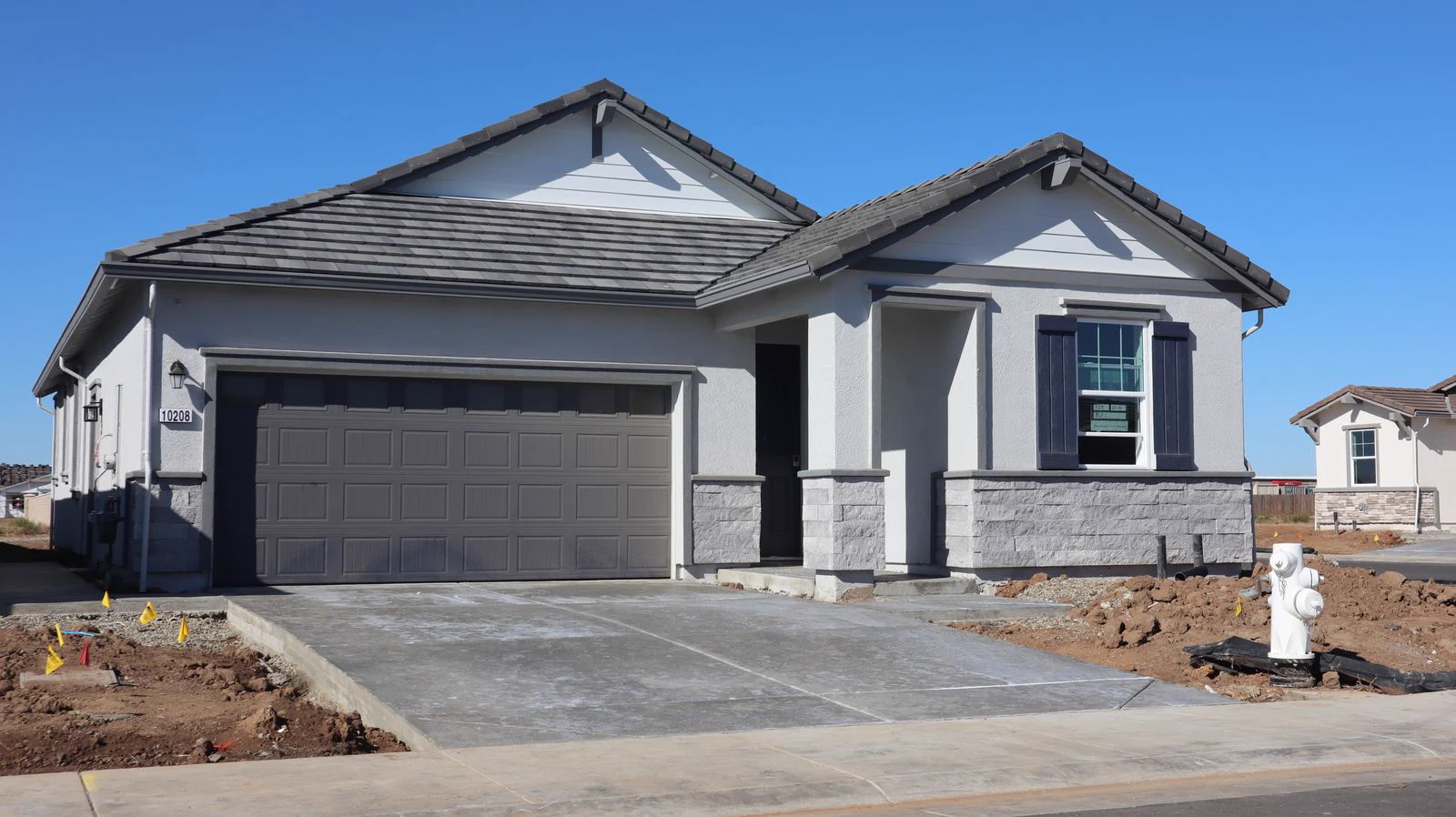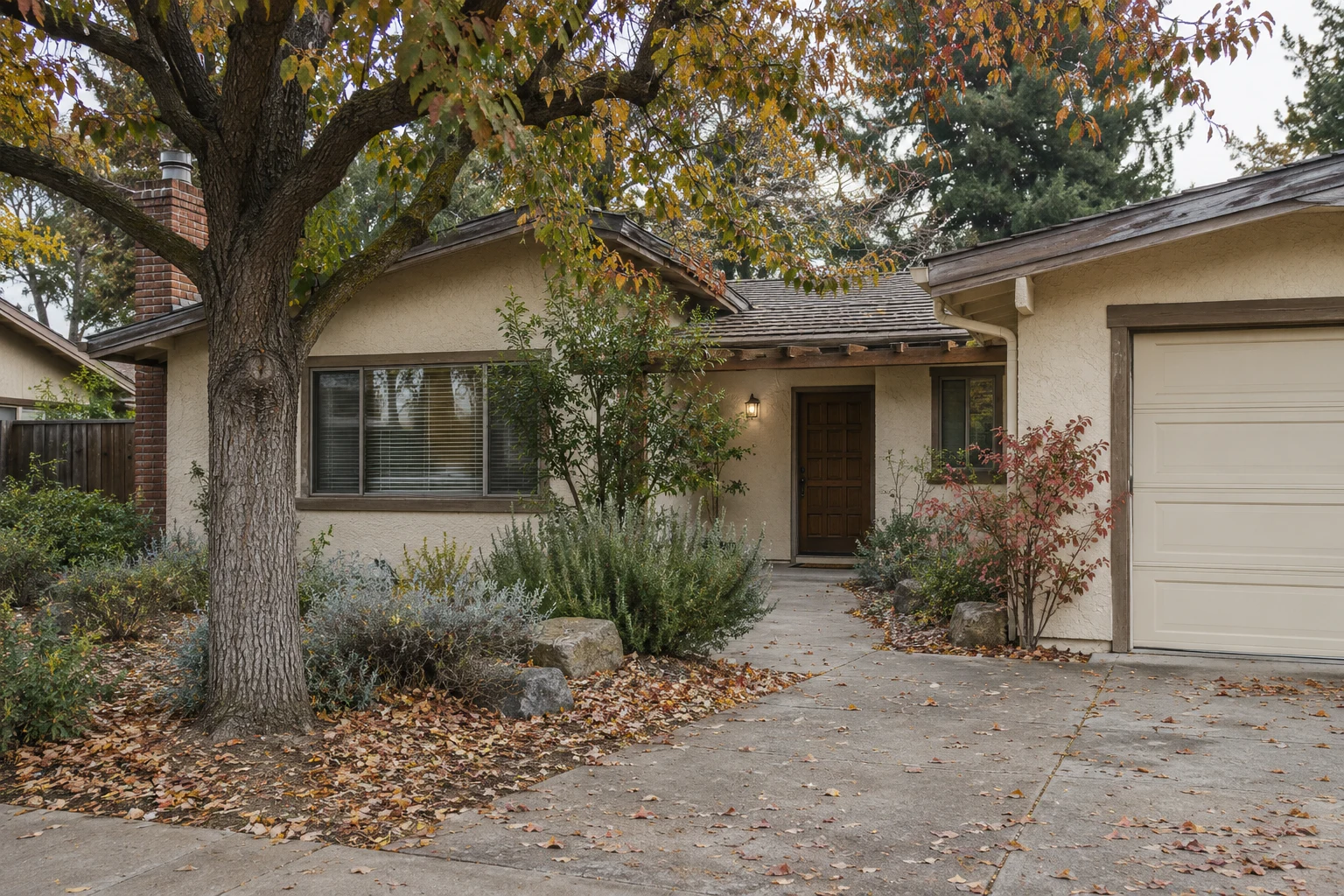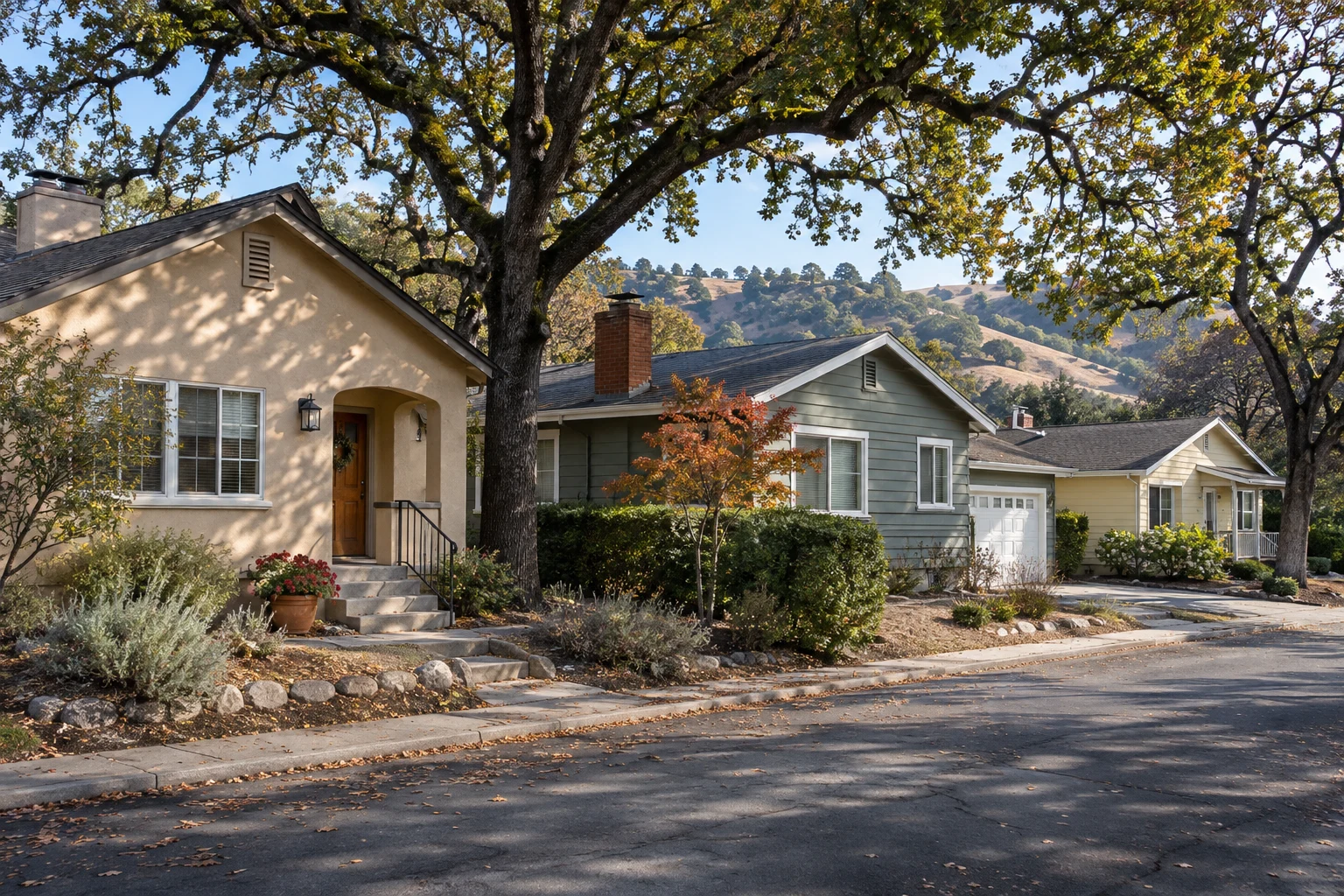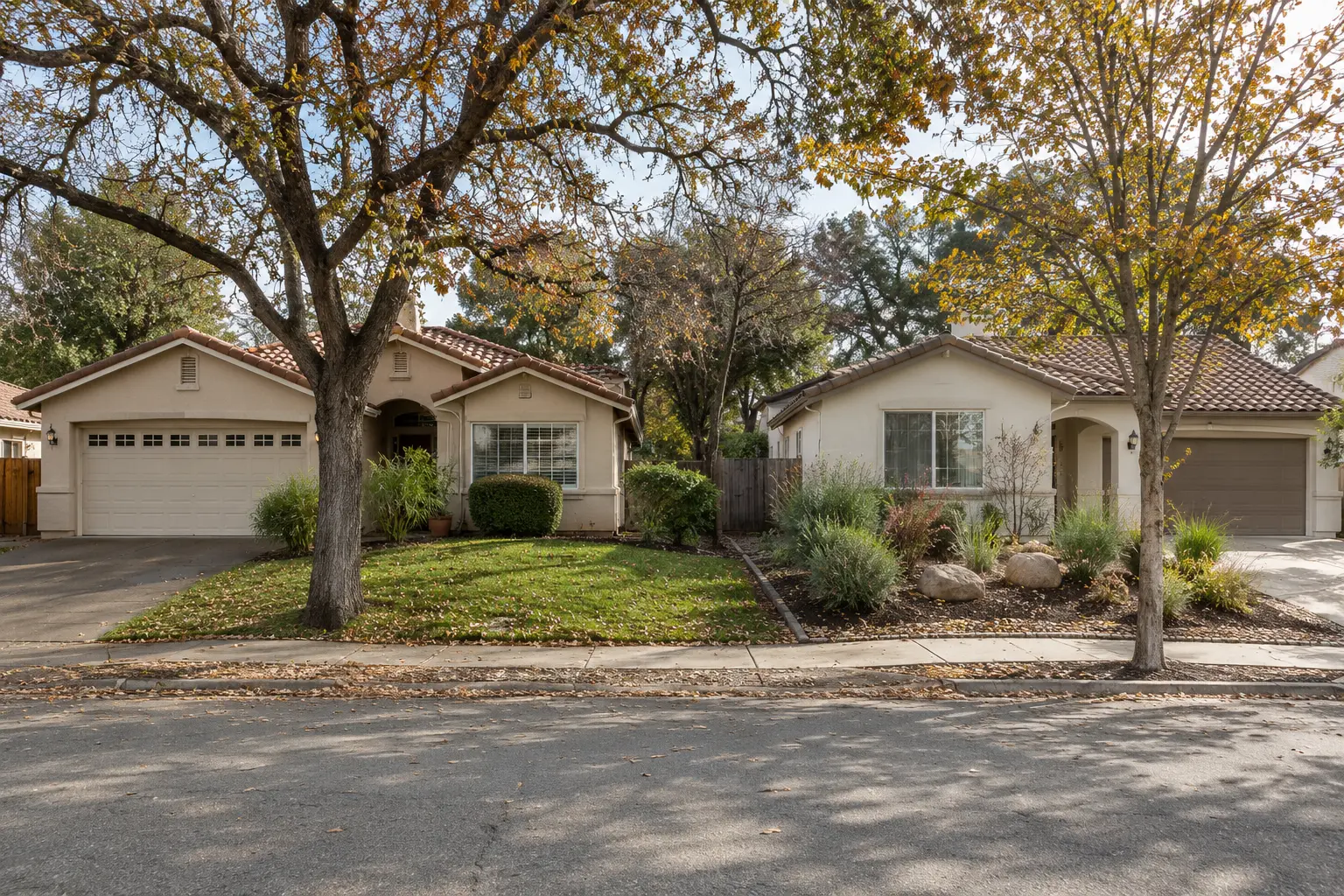
Two homes in Rocklin can have four bedrooms, nearly identical square footage and the same ZIP code. One backs onto a quiet open space. The other backs onto a busy road. One has a newer roof and an updated kitchen. The other has repairs waiting for its next owner.
Would you pay the same price for both?
Probably not. But how much less would you pay for the second one? And how would you prove it?
That is the hard part of valuing a house. It isn't getting a number. You can get one in seconds. It's deciding which other houses a real buyer would consider instead, what those buyers actually paid, and whether the differences are meaningful enough to change the price.
This Rocklin comparison is illustrative, not a pair of homes we inspected. The question is real, though, whether you're preparing to sell, refinancing, or wondering how much equity you could borrow.
The most important house might not be the closest one
Say a home down your street just sold for $725,000. It is tempting to treat that sale as the answer to what your home is worth. It's nearby. It has the same number of bedrooms. Perhaps it even has the same floor plan.
But what if it was fully remodeled and yours needs a roof? What if its lot is more usable? Or what if a home two neighborhoods away, though farther from your front door, attracts the same buyers and has much more in common with yours?
Fannie Mae's appraisal guidance asks for sales that compete for the same buyers. Proximity matters, but it isn't the only test. Condition, design, site, location, and market area matter too. An appraiser can use a sale from a competing neighborhood when the choice is supported and the differences are analyzed. [1]
The question I would ask isn't just, “Which sales did you use?” It's, “Which nearby sale did you reject, and why?”
A useful valuation should be able to answer that without hiding behind a complicated model or an impressive-looking report. And it shouldn't pretend every difference has an obvious dollar value. A roof that needs replacement has a cost, but the market's reaction to that condition isn't necessarily equal to the contractor's estimate.
The Lincoln problem: the price isn't the whole deal
New construction adds another layer, particularly when buyers are comparing a resale with a builder's available homes.
Imagine two Lincoln houses advertised for $650,000. One is a resale. The other is new, and the builder offers $20,000 toward eligible financing costs through a particular lender. These are hypothetical figures, not current builder offers.
The new-home buyer may get a very different monthly payment or amount of cash needed at closing. But that doesn't automatically mean the builder's home is worth $630,000, or that the resale should be discounted by $20,000.
A financing incentive has terms. It might be available only with a certain loan, rate, lender, or closing date. It might not be fully usable by every buyer. And its effect on market value depends on how buyers actually respond to it.
Fannie Mae requires adjustments for concessions to reflect their market effect—not a reflexive dollar-for-dollar subtraction. [2]
So there are two different questions. What is the home worth? And what does the transaction actually cost this particular buyer? They overlap, but they aren't interchangeable.
That distinction matters to a resale owner looking at a builder's closed price and to a buyer who assumes two homes with the same sticker price represent the same deal.
A sale that closed last week may have been negotiated months ago
Here's another detail that can get lost in a quick comparison: the date a buyer agreed to pay the price.
A house may close in November under a contract signed in September. Another may close the same week after a much more recent negotiation. Those sales can appear side by side as fresh evidence even though the buyers made their decisions under different conditions.
Fannie Mae calls for analysis of market changes between the comparable's contract date and the effective date of the appraisal. An adjustment needs evidence; so does the decision not to make one. [2]
When someone shows you a comparable sale, ask for the contract date as well as the closing date. It's a small question that can reveal a lot about how carefully the comparison was made.
What the online number knows—and what it may not
Automated valuation models can process enormous amounts of information: recorded transactions, property characteristics, listing details, and patterns across neighborhoods. That makes them useful. It doesn't make every property equally easy to estimate.
Zillow describes its Zestimate as a starting point, not an appraisal. It uses public and listing information, among other inputs. Zillow's nationally reported median error figures, as reviewed for this draft on November 10, were 1.80% for listed homes and 7.21% for off-market homes. Those are provider-reported national medians, not Placer County accuracy measurements or a forecast of the error on your home. [3]
A home with a current listing gives an estimate system more recent information than a home that hasn't been on the market in years. Even then, a listing description isn't a substitute for knowing whether an addition was permitted, how much work a kitchen really needs, or what buyers thought of a difficult lot.
And the source data aren't perfect. Placer County's Assessor cautions that property information may be outdated or inaccurate and should be checked before business decisions. [4]
If an online estimate seems surprising, begin with the boring questions: Does it have the right living area? The right lot? The right property type? Has it confused a permitted addition with unfinished space? Does it know about a major renovation—or a major problem?
Fixing the property facts may be more useful than collecting another estimate.
If three AI estimates agree, are they right?
Not necessarily. But they aren't necessarily wrong either.
A November 10 HousingWire contributor article raised the possibility that multiple AI tools can produce similar values because they share assumptions. Its examples were hypothetical; they did not establish a valuation failure on a particular property. [5]
Agreement is worth investigating, not dismissing. Several tools might agree because the property is straightforward and the sales evidence is strong. Or they might all overlook the same condition issue, rely on incomplete public records, or define the competing market too broadly.
The useful test isn't to ask a fourth chatbot for its opinion. It's to put the evidence on the table: the property's verified facts, the closed sales selected, the apparently similar sales excluded, and the reasons for each choice.
A qualified local appraiser can provide an independent opinion for a defined purpose and date. A real estate agent's comparative market analysis can help with a listing decision. Neither is an infallible oracle, and neither should be accepted without understanding the comparisons.
The goal is not to prove the computer wrong. It's to understand why the number deserves your confidence—or doesn't.
A $40,000 valuation difference can change your borrowing plan by $32,000
Let's put this into a homeowner decision.
Suppose your Roseville home is estimated at $700,000 and you owe $450,000 on your mortgage. On paper, that's $250,000 in equity.
But equity and cash available to borrow are not the same thing.
For illustration only, assume a lender accepts the $700,000 value, permits total mortgage debt up to 80% of that value, and there are no other liens. The maximum combined debt in this example would be $560,000. After subtracting the existing $450,000 balance, that leaves $110,000 of potential borrowing room before costs and other underwriting limits.
Now suppose the lender's accepted value is $660,000. At the same assumed 80% ceiling, combined debt is limited to $528,000. Subtract the existing mortgage and the borrowing room falls to $78,000.
A $40,000 difference in accepted value changes the potential borrowing room by $32,000 under these assumptions. The 80% limit is an example, not a universal lender rule or a loan offer. Actual limits depend on the loan product, income, credit, existing liens, and underwriting. Home-equity borrowing also carries fees and risks, including the possibility of losing the home if the debt isn't repaid. [6]
Selling is a different calculation. At a $700,000 sale price with a $450,000 payoff, the starting difference is $250,000 before commissions, other selling expenses, credits, taxes if applicable, and adjustments. If total selling expenses and credits were hypothetically $35,000, the result would be $215,000. That $35,000 is a teaching assumption, not a Placer County cost estimate.
This is why the same online value can lead to very different conversations depending on whether you're selling, refinancing, or using equity.
Five questions before you make a decision
You don't need to become an appraiser. You do need to know what the number is built on.
- Are the property facts correct? Verify size, permitted space, lot, condition, and meaningful improvements.
- Which closed sales would a real buyer compare with this home? Ask why those sales were selected—and why an attractive nearby sale was left out.
- What was actually included in the deal? Check concessions, builder financing incentives, and contract dates where available.
- How wide is the uncertainty? A point estimate can look precise even when the evidence supports a range.
- What decision am I making? An asking price, an appraisal for lending, net sale proceeds, and usable equity are different numbers.
Federal quality-control rules for automated valuation models apply to specified mortgage-related uses, not every public home-value website. A consumer estimate should not be mistaken for a lender's accepted collateral value. [7]
I would like to take this further with an actual Placer County property: document the competing sales, ask a qualified local professional to select and reject comparables before seeing the automated estimates, and report what changes. Maybe the automated values will hold up. Maybe one overlooked sale or property detail will move the analysis. Either result would be worth showing.
Until then, here's the question I'd keep in mind whenever a website tells you what your home is worth:
Would the buyers who paid those comparable prices really have considered your home an alternative?
If you can't answer that, the estimate may be a useful starting point. It isn't yet a decision.
Sources and reporting note
This is an educational feature using clearly labeled hypothetical properties and financial examples. It is not a completed property-level investigation, a licensed appraisal, or a finding that a particular Placer County automated estimate is inaccurate.
- Fannie Mae, Comparable Sales. (new tab)
- Fannie Mae, Adjustments to Comparable Sales. (new tab)
- Zillow, Zestimate methodology and accuracy. (new tab)
- Placer County Assessor, Property Details. (new tab)
- HousingWire, 3 AI agents value a home similarly, could they be wrong?, November 10, 2026, contributor analysis. (new tab)
- FTC, Home Equity Loans and Home Equity Lines of Credit. (new tab)
- FHFA, Quality Control Standards for Automated Valuation Models. (new tab)
Illustrative equity comparison
| Scenario | Accepted value $700,000 | Accepted value $660,000 |
|---|---|---|
| Existing mortgage | $450,000 | $450,000 |
| Assumed 80% total debt | $560,000 | $528,000 |
| Potential room before costs | $110,000 | $78,000 |