Jump to a section
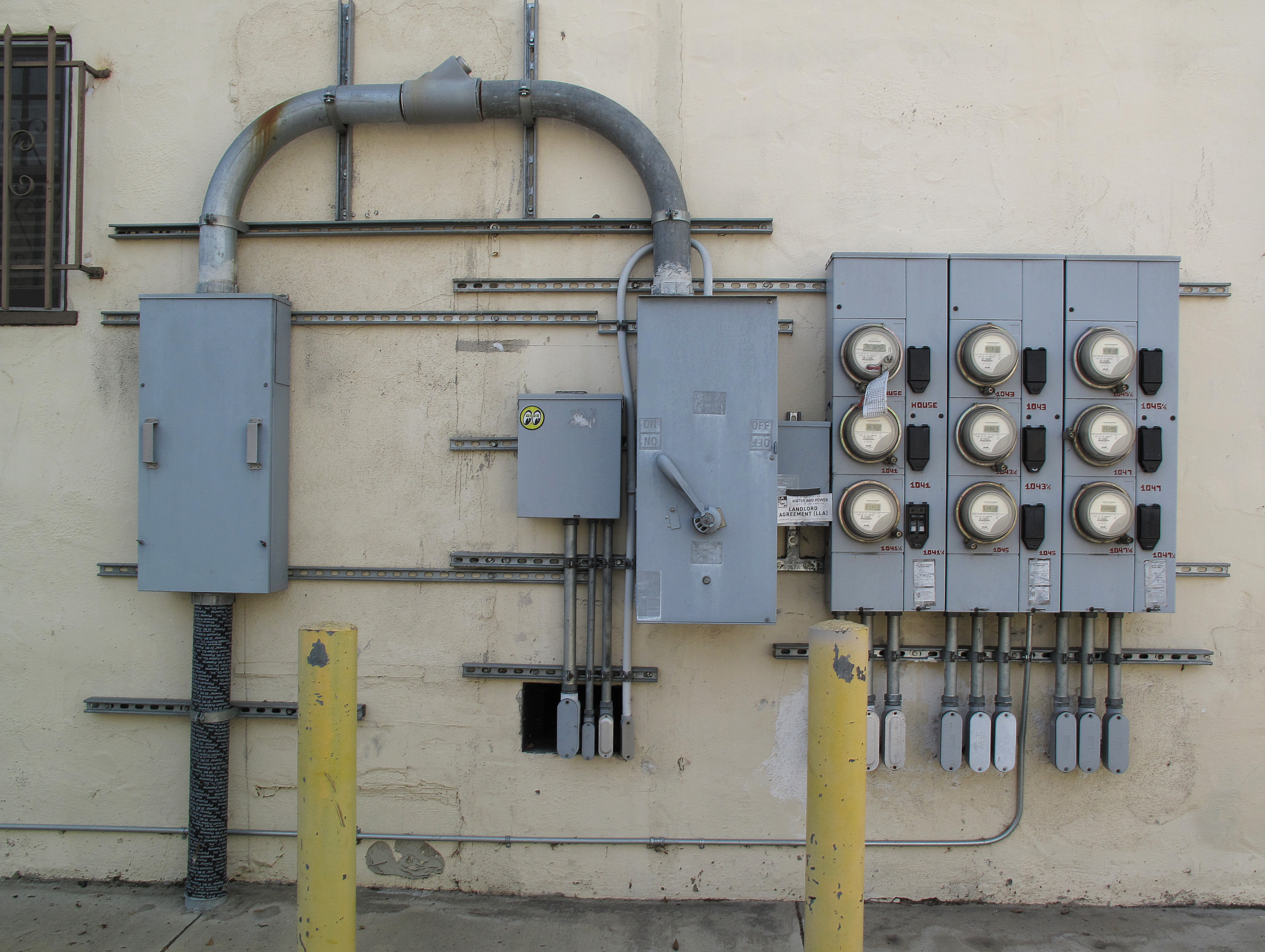
Data centers are driving a new wave of electricity demand. But before worrying about what that means for your household budget, there's something worth checking: Who actually supplies your electricity, and who pays when the grid needs to expand?
Open your electric bill before opening another headline about artificial intelligence.
Across the country, technology companies are building enormous data centers to support AI. Those facilities need electricity, sometimes in quantities comparable to the needs of entire communities. That has raised an understandable question for homeowners: Are we going to help pay for all this?
It's a good question. But in Placer County, the answer begins with something many homeowners rarely think about.
Two households just a few miles apart can receive electricity from entirely different providers, under different rates and regulatory arrangements.
A homeowner in Roseville might receive electricity from Roseville Electric, the city's community-owned utility. Another homeowner might receive generation service from Pioneer Community Energy while PG&E delivers the power. Others receive both generation and delivery from PG&E.
That distinction matters when trying to understand where electricity costs come from and how they might change.
California's electricity demand is changing
The California Energy Commission estimates that data centers represented approximately 1,000 megawatts, or 2%, of peak demand on the California Independent System Operator's grid in early 2026.
Its planning forecast projects that figure could reach approximately 4,500 megawatts, or 9%, by 2040.
That's substantial growth.
But here's the distinction that gets lost in some headlines:
A projection that data centers could account for 9% of peak electricity demand does not mean your electricity bill will increase 9%.
Those figures measure demand, not residential electricity rates. They also include data centers supporting many kinds of computing, not exclusively artificial intelligence.
Source: California Energy Commission, Data Centers (new tab)
The financial question is what happens when utilities need additional infrastructure to accommodate that demand.
Imagine a large data center that requires a new substation or transmission improvements. Who pays for that infrastructure? The company requesting service? Other customers of the utility? Some combination?
And what happens if the utility invests in new capacity but the anticipated demand never materializes?
These are not hypothetical concerns from a regulatory perspective. California regulators are examining how costs associated with large electricity users should be allocated.
An April 2026 California Public Utilities Commission proceeding addresses rate design for large loads, including data centers. It also identifies a required assessment of the potential costs associated with new, large transmission-connected data-center loads.
That proceeding is important, but it is not evidence that a new data-center surcharge has already been added to Placer County household bills.
Source: CPUC Rulemaking R.26-04-009 (new tab)
Your neighbor's electricity bill might work differently from yours
One of the more interesting things about living in Placer County is that electricity service isn't uniform.
Consider three common arrangements.
Roseville Electric
Roseville operates its own community-owned electric utility. Residential customers pay under Roseville Electric's rate schedules rather than PG&E's standard residential electric tariffs.
That doesn't make Roseville immune to broader electricity-market pressures. It means homeowners should examine Roseville's actual rates and utility decisions rather than assuming every PG&E headline applies to them.
Pioneer Community Energy and PG&E
Pioneer customers receive electricity generation service from Pioneer, while PG&E continues to deliver electricity through its distribution system.
PG&E sends the consolidated bill.
A Pioneer customer may see generation charges from Pioneer, delivery charges from PG&E and additional adjustments, including the Power Charge Indifference Adjustment, commonly called the PCIA.
Seeing both companies on the bill doesn't mean you're being charged twice for the same electricity generation.
But it does mean comparing electricity costs requires looking beyond a single line item.
Source: Pioneer Community Energy, Understanding Your Bill (new tab)
PG&E generation and delivery
Other households receive both services from PG&E. Their electricity costs reflect applicable PG&E tariffs, including generation, delivery and other authorized charges.
These arrangements help explain why a statewide electricity story may affect neighboring households differently.
What does electricity actually cost in Roseville?
Let's put some numbers behind the discussion.
Suppose a Roseville Electric residential customer uses 800 kilowatt-hours in one month.
Using the published standard residential rate schedule effective July 1, 2026, and assuming no solar adjustments or assistance discounts:
| Charge | Illustrative amount |
|---|---|
| Monthly basic service charge | $30.00 |
| First 500 kWh at 14.69¢ | $73.45 |
| Remaining 300 kWh at 19.12¢ | $57.36 |
| Listed per-kWh surcharges | $6.18 |
| Illustrative electricity subtotal | $166.99 |
This is an illustrative calculation of listed electricity charges, not an actual customer statement or a complete municipal utility bill.
Source: Roseville Electric, Residential Rates (new tab)
Now imagine that household reduces consumption from 800 kWh to 700 kWh.
Under the same schedule, the illustrative subtotal falls to approximately $147.10.
That's a savings of about $19.89.
Why isn't the entire bill reduced proportionally? Because the monthly basic charge remains, while the reduction in consumption comes from the higher usage tier and associated surcharges.
This is a useful distinction when trying to understand why a bill changed.
Your electricity bill can increase because you used more power, because rates changed, because an adjustment changed or because several things happened at once.
A national headline cannot tell you which explanation applies to your home.
AI isn't the only pressure on electricity prices
California electricity rates reflect a complicated mix of expenses.
The California Public Utilities Commission identifies several major cost drivers for investor-owned utilities, including electricity procurement, transmission and distribution infrastructure, wildfire-related expenses and public-purpose programs.
Wildfire expenses include prevention work as well as liability costs.
Source: CPUC, Electric Affordability (new tab)
This matters particularly in Northern California, where wildfire-related costs have been a significant part of the electricity conversation.
It would be misleading to attribute every rate increase to AI simply because data-center construction is accelerating.
It would be equally premature to assume growing demand cannot eventually affect residential customers.
The question is how costs are assigned, which investments are approved and which utility customers are responsible for paying them.
What if you're buying a home in Placer County?
Here's where the discussion becomes especially practical.
Suppose you're considering two otherwise comparable homes, one served by Roseville Electric and another served through a different utility arrangement.
You probably compare property taxes, homeowners insurance, mortgage payments and possibly HOA dues.
Electricity deserves a place in that conversation, too.
Not because one utility is automatically cheaper for every household, but because different providers have different rate structures.
Before buying, consider requesting actual electricity usage information for the property and identifying its utility provider.
If the home has solar panels, an electric vehicle charger, a swimming pool or electric heating, those details may materially affect future consumption.
A friend's electric bill from another neighborhood may be a poor estimate of what you'll pay.
And if you're thinking about installing solar or buying an electric vehicle, review the rate plan and applicable credits or compensation rules before calculating potential savings.
How to tell whether your own bill is increasing
Start with two statements covering comparable periods.
Check the number of billing days and total kilowatt-hours consumed. Then look at the applicable rates, fixed charges, credits and adjustments.
If you receive a combined PG&E bill, separate natural gas charges from electricity charges. If Pioneer provides your generation service, distinguish those charges from PG&E delivery charges.
The goal is to answer a simple question:
Did I use more electricity, or did the cost of buying the same amount of electricity change?
Once you know that, you can ask a much more useful question of your provider.
The question California still needs to answer
AI's electricity needs are real, and the projected growth is significant.
But whether that growth translates into higher household bills depends on decisions about infrastructure, utility rates and cost allocation.
Those decisions deserve public attention, especially when large new electricity customers require expensive upgrades.
For Placer County homeowners, the sensible approach is neither to dismiss the issue nor assume the worst.
Understand who supplies your electricity. Understand the charges already on your bill. And pay attention to who is expected to fund the next round of grid expansion.
Because the most important question isn't simply how much electricity AI will use.
It's who will pay for the infrastructure needed to supply it.