Quick answers
Open a question. Read the answer right here.
How do I check a development proposal near a home?
Start with the property's jurisdiction, then review official planning portals, project maps, agendas and environmental documents. Record the retrieval date.
Jump to a section
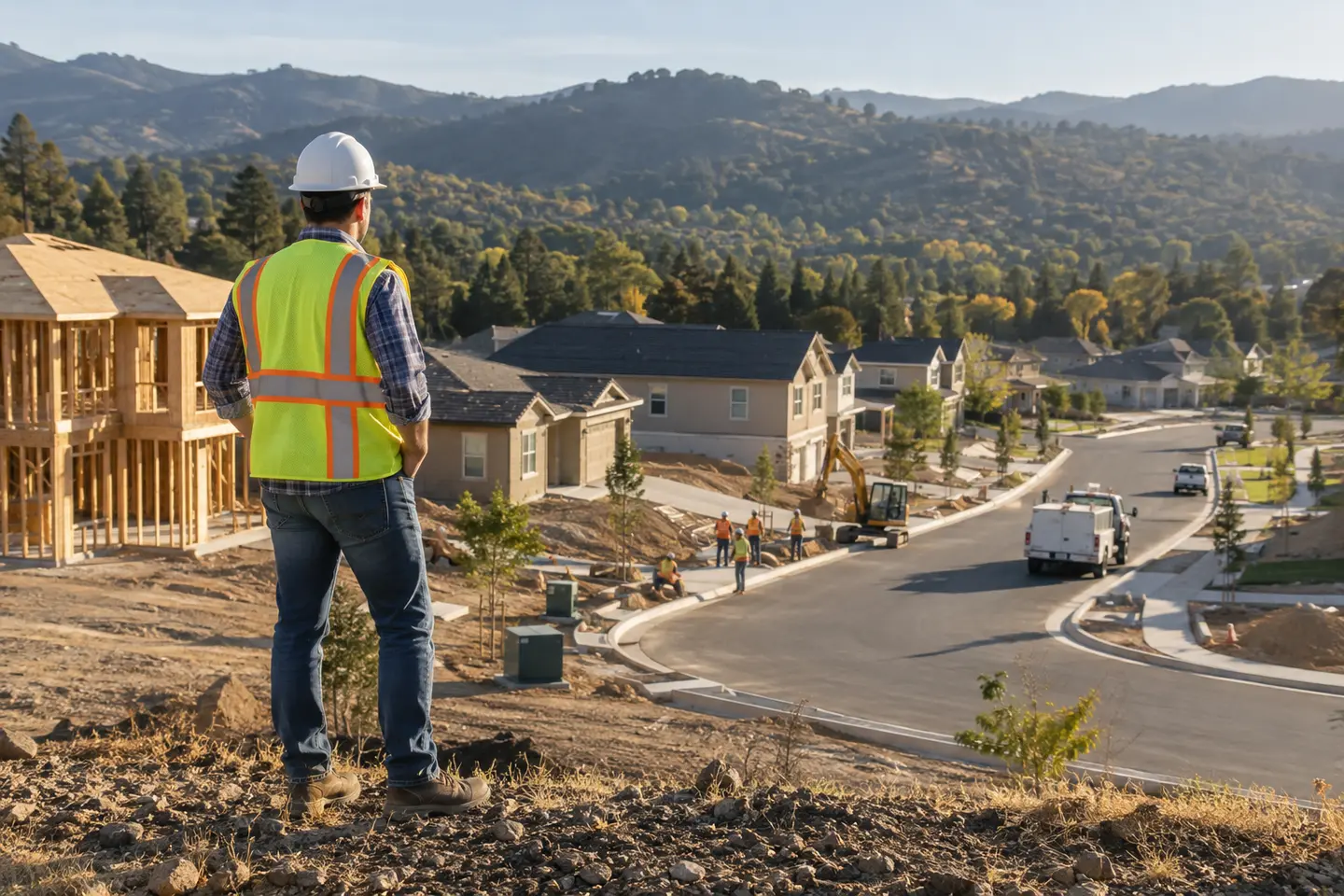
Start with jurisdiction, not a rumor
Development information often circulates through signs, neighborhood posts, concept drawings, or conversations. The first task is to identify which city or county has authority over the parcel and locate the official planning record.
A project may be proposed, under review, approved, litigated, redesigned, phased, or inactive. Those statuses are not interchangeable.
Read beyond the project name
Planning portals, staff reports, environmental documents, maps, agendas, and conditions of approval can reveal access, density, land use, infrastructure, schools, traffic analysis, and the stage of review.
Record the retrieval date because plans change. Distinguish statements by the applicant from findings or decisions by the agency.
Translate the record carefully
A nearby proposal may affect a buyer's view of the area, but the eventual outcome and timing can remain uncertain. A mortgage professional should not predict property value from a planning document.
The useful service is to help the client find the record, frame questions, and involve the appropriate real estate, planning, legal, appraisal, or tax expertise.
Local intelligence should preserve uncertainty
A clear report says what is official, what is proposed, what remains unknown, and where the reader can verify updates. It does not convert a development pipeline into a sales claim.
That restraint makes the information more durable and more useful when a household is deciding how a location fits its life.
Build a property evidence file
Save the property address and jurisdiction, the public records consulted, the retrieval date, open questions, and the professional responsible for each answer. Keep proposals separate from approvals and estimates separate from verified costs. Local information changes, and the record should make it possible to see what was known when the decision was made.
The useful file is not a pile of links. It connects each source to a question about affordability, timing, access, insurance, condition, future plans, or the household's intended use of the property.
Observed facts versus local interpretation
Official records establish jurisdiction, published plans and public requirements. The effect on a particular property is an interpretation that needs property specific due diligence. Placer County planning records (new tab)
Continue the local research
- A Placer County home search needs a location specific property brief
- Renovation financing starts with scope, contingency and control
- Bring the property context to our team
How do I check a development proposal near a home?
Start with the property's jurisdiction, then review official planning portals, project maps, agendas and environmental documents. Record the retrieval date.
Sources and further reading
Use the source below to read the agency’s guidance and check for later changes.
Keep exploring



Stay ahead of the next move
Choose the updates worth opening.
Get the Morning Market note on rates and markets, the housing update, or both. You choose what lands in your inbox.
Know What We Know